• USD
    • USD
    • EUR
  • My Account
  • Login
LEDGEEKS
  • Bulbs & Tubes
  • Indoor
  • Outdoor
  • Solar Lights
  • Exit / Emergency
  • EV Chargers
  • Sensors & Lighting
  • Components
0 item
Categories
  • Agriculture
  • Religious Services
  • Consultant
  • Contractor
  • Designer
  • Education
  • Energy
  • Energy Consultant
  • Government
  • Healthcare
  • Hospitality
  • Property
  • Reseller
  • Restaurant
  • Retail
  • Warehouse
  • Home
  • Uncategorized

Categories

  • Uncategorized
Best sellers
  • LED Disk Light, 6″, 15W LED Module, 120V, 3000K

    $9.25

    0 review(s)
  • LED Undercabinet Fixture, 120V, 3000/4000K

    $13.82 – $35.10Price range: $13.82 through $35.10

    0 review(s)
  • Wall Pack Adjustable

    $79.99 – $152.99Price range: $79.99 through $152.99

    0 review(s)

Uncategorized

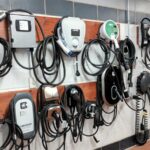
LEDGeeks Electric Car Charger

Categories: Uncategorized
Friday, April 2, 2021

Owning an electric vehicle (EV) means you’ll be able to dramatically reduce your fuel expenses and lower your vehicle maintenance costs. Plus, you’ll be doing your part to protect the environment by reducing the size of your carbon footprint. Of course, electric vehicles do require a fully charged battery so you won’t have to worry about running out of juice while you’re on the road. That means you’ll need a high-quality electric car charging station in your garage or parking area. It’s also important to execute a proper EV charger installation to ensure the reliable performance and safe operation of your vehicle.

What Are the Benefits?

Installing an EV charger will significantly reduce the time it takes to charge your car’s battery. You get a full charge up to six times faster (32 amp station) than when connecting the battery into a standard electrical outlet. Our EV chargers are safe and reliable — they’re IP54 rated for waterproof and come with a one-year warranty for your protection and peace of mind. They are also self-diagnosable and have a built-in fault alarm function.

The EV Charging process is relatively simple and is done in 4 steps. Begin by scanning the QR code located at the top of the charging station. Next, choose your method of payment. Our EV chargers accept a charging code, credit card, Apple pay, and an EV card. Once payment has been made, plug the charging connector into the vehicle. When charging is done, place the EV charging connector back and you are done. You can view the full charging summary on your smartphone.

The EV charging station is always paired with our software program. You’ll receive the latest software updates via Wi-Fi, and the EV mobile app allows you to view financial reports, usage reports, financial settings for every station, station ID tracking, and much more.

Our EV products meet the US Standard SAEJ1772 universal connector guidelines. This means that our EV chargers are compatible with the most popular EV products. These products include the Chevy Bolt EV, Chevrolet Bolt, BMW i3, Nissan LEAF, Tesla Model S, Tesla Model X, Volkswagen e-Golf, Toyota Prius Prime, Ford Fusion Energi, Ford C-Max Energi, Fiat 500e, Chrysler Pacifica Hybrid, and many more.

Your EV Charging Station Options

LEDGeeks offers three types of EV charging options: level 2 residential charger, level 2 commercial charger, and level 3 DC charger. The level 2 commercial and the level 3 DC chargers are intended for commercial use and can be installed anywhere on the ground with the assistance of trained professionals. The level 2 residential charger connects to an 240V electrical outlet via a power cord and must be installed on a wall. It can be used for both commercial and residential purposes.

Leasing options are also available. Terms between 36 – 84 months are obtainable. You can get up to 100% financing on equipment purchases. Our leasing plans include quick approvals, flexible credit criteria, deferred payments, and no hidden fees.

How Much Does It Cost to Install an EV Charging Station?

            The cost of your EV charger installation will depend on several factors. For instance, EV hardwire installation is more labor-intensive and will result in a higher cost than a Plug model installation. The closer the installation of the charger to your electrical panel, the lower your cost will be. Other factors include the difficulty of the installation and whether additional steps such as drywall patching are required. No installation costs are needed to use the portable charger.

Why Choose LEDGeeks for Your EV Installation Project?

            LEDGeeks has been providing premium electrical supplying services in Orange County for years. We are dedicated to providing a smarter supply and service to all our clients. We work with qualified and professional contractors who are eager to install and troubleshoot our EV chargers and keep them in peak working condition. Ask about our flexible maintenance programs. Contact us to learn more today!

0 Comment | Posted By ledgeeks

The Future of LED

Categories: Uncategorized
Friday, April 2, 2021

The LED industry is rapidly growing and it is not difficult to understand why. LEDs last longer, are more energy and cost efficient, include features such as dimming and color changing, and are much kinder to the environment. LED is rapidly replacing previous lighting technology such as Incandescent.

According to data provided by statista.com, LEDs were responsible for 1.8% of all artificial lighting in 2012. The most recent calculation was done in 2019 and it concluded that LED has risen to 46.5% of all lighting. Future estimates show that LED will provide 87.5% of all lighting in the year 2030. The global market size of LED lighting is projected to rise as well, from $70 million in 2019 to about $100 million in 2023. LED technology is very efficient and is expected to not only stay in the world, but to spread rapidly.

As the years are passing, more people are accepting LED technology in their lifestyle. And if there is a great demand fore LED, naturally business will come to provide the supply. Growing research into LED technology and a new competitive market has pushed the features and benefits of LED lighting to grow. For example, the most modern versions of LED fixtures have tunable wattage and CCT. These fixtures are exactly the same as their previous counterparts; except the customer can modify the brightness and color the fixture emit. These luxurious features do not even raise the price of the LED for that manufacturing capabilities of LED are becoming greater everyday.

Another technological achievement with LEDs is what is generally referred to as smart lighting. Smart lighting is capable of automotive controls, meaning they turn on automatically when a person is detected. What smart lighting is really known for however, are the Wi-Fi applications. This usage of Wi-Fi is referred to as Li-Fi. Li-Fi is an upgraded version of Wi-Fi Internet connectivity using light rather than radio waves with an ability to transfer speeds up to one hundred times faster. Smart LEDs would be capable of optimizing air conditioning and heating, power grid management, and next generation wireless technologies. Having Li-Fi integrated LED will allow commercial spaces and offices to create a much more stable Internet quality and connection.

The future of LED is looking brighter than ever!

0 Comment | Posted By ledgeeks

Which LED Color is Best For Your Eyes?

Categories: Uncategorized
Friday, April 2, 2021

Some of the most harmful light for your eyes is UV (ultraviolet light) such as what is emitted by the sun or a fluorescent light. Exposure to UV light can lead to cataracts and blindness. Therefore, protective eyewear is recommended where fluorescent lighting is used. Your eyes need to be protected from long-term and repeated exposure to UV lighting.

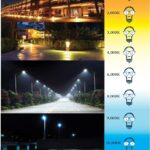
The best kinds of lighting to work with include warm light sources, such as natural light and artificial warm light. Natural light would be light from the sun with the UV rays shielded from you in some way. Some LED bulbs can produce artificial warm light. The color that light gives off depends on its temperature. You can see the temperature an LED bulb will give off in the form of kelvin. When shopping for an LED bulb, you will notice the specs for a bulb mention a number as low as 2700K or as high as 6500K. The kelvin is being measured there, or in other words, the color of the light. The lower the temperature, the more yellowish-red it is. A higher temperature corresponds with blue or violet light. An LED bulb that gives off natural yellow light would have a kelvin around 2700K-3500K. These are the LED bulbs you would want to buy to mimic the light of the sun.

Blue light is a form of light that that can be harmful on the eyes in high or extended doses. Overexposure may cause eyestrain, dry eyes, headaches, and tension in your neck and back. Blue light comes from modern appliances such as televisions, computers, and smartphones. It is very difficult in this age to not have to use any of these appliances. The best things you can do if you experience any of the mentioned symptoms is to purchase blue light filtering glasses or simply take a break from looking at blue light sources. A few LED bulbs can reach a Kelvin temperature above 5000K, which emits blue light. These LED Bulbs are mainly used for task lighting or home decorations. This means that blue light emitting LED bulbs are easy to avoid unless your workplace has them. A job that requires high Kelvin temperatures is usually a position where you need protective eyewear for your work related tasks. Even if this were not the case, wearing blue light filtering eyewear is always a good idea. When it comes to harmful artificial lighting, the main concerns are UV light and blue light. Lighting technologies outside of LED are going out of favor. Unless you notice a place is using outdated lighting technology you should not have to worry about UV light. An LED that mimics the color of the sun does not emit UV light like the sun does. Some LEDs however, emit blue light, which may lead to eyestrain if proper eye health guidelines were not followed. Blue light is less harmful than UV and is also easier to avoid. The best lighting for your eyes are LEDs that mimic the brightness of the sun. Lighting with lower Kelvin temperatures are required if you worry about your overall eye health.

0 Comment | Posted By ledgeeks

How Commercial LED Lighting Can Bring You More Sales

Categories: Uncategorized
Friday, April 2, 2021

The differences between LED and previous popular lighting technology is well known and can be found by checking our blog on Why Should You Choose LED. To summarize, LED lighting improves aesthetics, energy costs, and environmental waste. What is not well known is how these differences indirectly affect your business. Improper lighting can deter traffic from your establishment by making customers feel insecure.

The bigger your business, the more important it is to have LED lighting installed in your property. Lets start small and imagine you own a small shop where one or two LED strip lights provide sufficient lighting. If you do not have LED, you may have to wait up to 20 minutes for your lights to reach full luminosity. That is 20 minutes where customers may not be able to see all the fine details of your products. Which may deter the client from purchasing the product because it was not seen properly. One can argue you can just come in 20 minutes before you open and start lighting up the property, but that is still 20 minutes where your shop could have been open for business. LED Lighting is also known for having good light distribution. To equally light up anything in its range without losing luminosity. What this means is that with LED lighting there will be no unwanted shadows on your products that may make your products look worse than they actually are. Now how does LED lighting affect a large facility compared to a small shop? A larger property has to worry about the lighting outside of the shop as well. A parking lot needs proper parking lights. Consider the images below and Imagine you are a customer at night. The image on the left is a parking lot without LED and the right with LED. Would you want to drive into an improperly lit parking lot and walk in it for a short while to your destination? You would likely feel unsafe not being able to properly see your surroundings. The human imagination can sometimes be our greatest weapon against us. Even if there is no danger in the image, you cannot prove that. Survival instincts would tell you to avoid the unlit parking lot. Take a look at the well-lit parking lot. It has high quality shoebox area lights installed. You can see everything clearly. Parking here is much more comfortable. Because the parking lot on the right is better lit, it will attract more customers, which will lead to increased business.

Improving the aesthetics of your business is key to always being able to attract customers. A business can have the highest quality product sitting in their shelves, but if some customers never see it then that will negatively impact your sales. One-way to make sure people see your product is to make clients feel safe visiting your property with a well lit parking lot. Then viewing your product with proper shop lights. LED lighting will make your facility look professional, which will prevent customers from being deterred from your business. As a business, you have to maximize your sales. If you are unsure about your lighting or how it may be affecting your business negatively, contact a Geek!

0 Comment | Posted By ledgeeks

Electric Vehicle Charger Guide

Categories: Uncategorized
Wednesday, March 31, 2021

Are you tired of having to stop at a gas station and spend some of your money and time refueling your vehicle? Is it your dream to have an almost unlimited supply of fuel readily available at home or wherever you normally park your car for the night for little to no cost? If you own an electric car, this is a reality. Battery-electric cars never need gas, and hybrid cars can skip on the gas for short trips. Electric car charging is simple. With a level 1 portable charger, you can charge your vehicle at home or from any outlet, even while you sleep. Level 2 and level 3 charging options are also available and can charge your vehicle faster, but lack the portability.

A level 1 charger is the slowest method coming in at 3.5-6.5 miles per hour of charging time. Which is more than efficient enough if you can charge your vehicle overnight and only need to travel about 30-40 miles per day. All electric vehicles should come with a standard level 1 charger. They are the most portable chargers being able to plug into any outlet.

Our Home EV Charger is a level 2 charger. Level 2 charging is around 5 times faster than level 1, but it requires installing a charging station, or (EVSE). It also requires a 240 volt or 208 volt electrical circuit, similar to what is installed for an electrical dryer. Level 2 will commonly be found in public spaces or commercial charging stations. Any vehicle that uses a level 1 charger is compatible with a level 2 charger.

Direct current fast charging, also known as a level 3 charger, is the fastest available charger. It requires a 480 volt connection meaning it is not recommended for home use and not every vehicle can use it. DC chargers will usually be found in shopping centers or major travel corridors. Depending on your vehicle, a DC charger can add up to 10 miles per minute of charging. Up to 7 times faster than a level 2 charger.

Check out our EV category and products for more information regarding our chargers.

0 Comment | Posted By ledgeeks

Why Should You Choose LED?

Categories: Uncategorized
Wednesday, March 31, 2021

Lighting is essential to any building, facility, home, or establishment. There are many lighting options for you to choose from with the popular options being incandescent, light-emitting diodes (LED), halogen, and compact fluorescent lights (CFL). Light-emitting diode (LED) is the most recent innovation of all these options, being discovered as a viable lighting option in 1962. Over time, LEDs have become the most preferred lighting method. LED lighting saves money and energy all while conserving the environment.

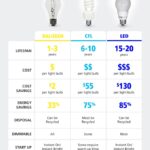
LED bulbs have a superior operational life compared to other forms of lighting. The average LED lasts over 50,000 hours, which is 25 times longer than incandescent and 3 times longer than CFL. An LED that is rated for 50,000 hours will start losing some brightness after that amount and never before. All this makes LED lighting much cheaper to maintain compared to the competition, but what about making the switch? LED fixtures have become cheaper as technology and manufacturing advances. This means that the upfront costs to LED Lighting is also becoming cheap.

LED lights are highly energy-efficient. They can save around 90% of energy consumption when compared to incandescent lights and 50% compared to CFLs. LED’s emit less heat which makes them a perfect choice in buildings that heat up. Less heat emission means less demand for cooling systems. Unlike the competition, LED utilizes semiconductor devices that allow LEDs to be dimmable up to 10% of their optimum output. Dimming lights is another way LEDs can use up less energy.

There are several ways in which LEDs help out the environment. For more information, check out our How Does LED Lighting Help The Environment page. The main takeaways are that LEDs do not contain highly toxic mercury unlike CFL. They produce less waste by lasting longer hours and not having to be replaced as often. And they use less energy, which minimizes their carbon footprint.

Investing in LED lighting is a decision that you will never regret. You will see the impact of your LEDs through the reliability of their light and a lower number on your electricity bill. For more information on how to make the switch to LED lighting, check out our article on How To Decide Which LED is Best For Yo

0 Comment | Posted By ledgeeks

How to Decide Which LED is Best For You?

Categories: Uncategorized
Wednesday, March 31, 2021

There are many reasons why you would want to make the switch to LED. You may have been attracted to their longevity, energy-efficiency, durability, or their environmentally friendly qualities. Either way, there should be a LED bulb that is tailored to your requirements. LED lighting is becoming cheaper to switch to every day as technology and manufacturing advances. Some areas are still offering LED rebates for large-scale projects, we recommend looking into rebates if you are eligible. So how do you pick out the correct LED fixtures in your switch to LED?

The first thing to do is to figure out how many bulbs you need. We recommend trying out our Lumens/Watt Calculator to figure out how many lumens (brightness) and amount of bulbs you need. Once you fill in the dimensions of the room you are trying to light up, our top 5 products for those conditions will update automatically on the product table. Keep in mind that the calculator can only start your search and give you ideas. Some things the calculator cannot account for is specialized lighting. For example, if you wanted to light up the areas underneath your kitchen cabinets, then the Undercabinet Fixture is suited exactly for that. To make sure you have the correct product for the correct job, try finding a product through our Indoor/Outdoor/Solar/or Emergency dropdown menus and their respective submenus.

Selecting the right light appearance is also very important. The Kelvin scale is used to determine light appearance. A lower temperature indicates a warmer, yellow light while a higher temperature indicates a cooler, white light. 3500 Kelvin is considered neutral white and can be used in almost every space. Kitchens, bathrooms and workspaces are recommended to go with either 4000 Kelvin or 5000 Kelvin fixtures. A few appliances go up to 6500 Kelvin, which is used for task lighting, detailing, or industrial applications.

Now that you know how to determine which LED bulb is right for you, it is time to consider a test purchase. It is important to find the right replacement bulb before investing in many bulbs. If you live nearby our warehouse, consider visiting to not only get a free consultation but possibly a free sample before your full purchase.

0 Comment | Posted By ledgeeks

How Does LED Help The Environment?

Categories: Uncategorized
Wednesday, March 31, 2021

Environmental conservation is a discussion that is growing in popularity as time passes. Many people have become aware of harm being caused to the environment are now consciously trying to protect it by releasing less pollution. When it comes to environmental friendly lighting, there is currently no better option than LED. So how does LED lighting benefit the environment?

LED lights are highly energy-efficient. They can save around 90% of energy consumption when compared to incandescent lights and 50% compared to CFLs. Not only does this impact your personal energy consumption, it also affects how much energy electric power plants have to create to power your home.

The average LED Light has a long-life of 30,000-50,000 hours, which is much greater than the conventional counterparts. This longer life span reduces the need to replace your bulb after every few months. Reducing the amount of waste that will go into landfills.

LED lights are a product of advanced solid-state technology, which has added much needed durability to light bulbs. The majority of LED fixtures are robust and do not utilize glass. Making LEDs a safe choice in harsh weather conditions that also reduce chance of injury from lack of glass breaks.

LED lights are free of any chemical, which can be hazardous for environment and public health. Compact fluorescent lights have 4-5 milligrams of Mercury (a poisonous substance) present in each fixture.

These are the major reasons why LED lighting is considered to be the best for the environment. LED technology is still advancing and growing. LED lighting will become better for the environment as the decades come, especially solar powered LEDs.

0 Comment | Posted By ledgeeks

What is LED?

Categories: Uncategorized
Wednesday, March 31, 2021

A light-emitting diode (LED) is a semiconductor device that emits light when an electric current is passed through it. Light is produced when the particles that carry the current combine together within the semiconductor material. Because the light in an LED is generated within the material, LEDs are different from incandescent, halogen, or fluorescent technology.

The main semiconductor materials are Indium gallium nitride, Aluminum gallium indium phosphide, Aluminum gallium arsenide, and Gallium phosphide. Indium gallium nitride produces blue, green, and ultraviolet high-brightness LEDs. Aluminum gallium indium phosphate is used to emit yellow, orange, and red high-brightness LEDs. Aluminum gallium arsenide is used for red and infrared LEDs. Finally, Gallium phosphide discharges yellow and green LEDs.

Inside the semiconductor material are electrons and holes separated by energy bands. These energy bands determine the amount of energy or photons that are emitted by the LED. This photon energy determines the size of the wavelength, or color. The wavelength is also dependent on the semiconductor being operated. By managing the semiconductor material and the energy bands, you can alter the color the LED produces.

While all of this may sound technical, the main takeaway for you is that this LED technology has completely revolutionized the lighting industry. LED lighting solutions are highly efficient, long lasting, environmentally friendly, and flexible. LED technology and manufacturing has rapidly increased since its birth and is now the preferred lighting method for lighting projects by lighting professionals across the world.

0 Comment | Posted By ledgeeks

footer:Style10(index14)

  • Request a Quote
  • My account
  • Shop
  • Cart

Company

  • Home
  • Blog
  • About Us
  • Contact Us

Information

  • LED GEEKS Warranty
  • LED GEEKS Catalog
  • Wholesale Discounts
  • Showroom Locations

Corporation

  • Free Shipping
  • Refund Policy
  • Privacy & Policy

Account

  • Request a Quote
  • My account
  • Shop
  • Cart
Hot Tags

Choose by Industry

Agriculture Contractor Designer Education Energy Consultant Government Healthcare Holidays Hospitality Property Religious Services Reseller Residential Restaurant Retail Solar lights Warehouse

Copyright © 2023 SEVENTY 2 Lighting.

All Rights Reserved. Powered by Bluepaan Media Agency

Close
Sign in Or Register
Forgot your password?

NEW HERE?

Registration is free and easy!

  • Faster checkout
  • Save multiple shipping addresses
  • View and track orders and more
Create an account
Or
x
  • Menu
  • Categories
  • Bulbs & Tubes
  • Indoor
  • Outdoor
  • Solar Lights
  • Exit / Emergency
  • EV Chargers
  • Sensors & Lighting
  • Components
  • Agriculture
  • Religious Services
  • Consultant
  • Contractor
  • Designer
  • Education
  • Energy
  • Energy Consultant
  • Government
  • Healthcare
  • Hospitality
  • Property
  • Reseller
  • Restaurant
  • Retail
  • Warehouse