
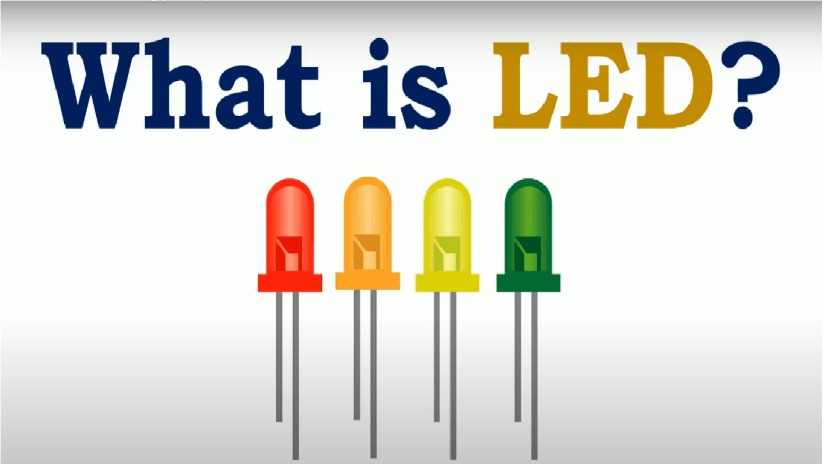
What is LED?
A light-emitting diode (LED) is a semiconductor device that emits light when an electric current is passed through it. Light is produced when the particles that carry the current combine together within the semiconductor material. Because the light in an LED is generated within the material, LEDs are different from incandescent, halogen, or fluorescent technology.
The main semiconductor materials are Indium gallium nitride, Aluminum gallium indium phosphide, Aluminum gallium arsenide, and Gallium phosphide. Indium gallium nitride produces blue, green, and ultraviolet high-brightness LEDs. Aluminum gallium indium phosphate is used to emit yellow, orange, and red high-brightness LEDs. Aluminum gallium arsenide is used for red and infrared LEDs. Finally, Gallium phosphide discharges yellow and green LEDs.
Inside the semiconductor material are electrons and holes separated by energy bands. These energy bands determine the amount of energy or photons that are emitted by the LED. This photon energy determines the size of the wavelength, or color. The wavelength is also dependent on the semiconductor being operated. By managing the semiconductor material and the energy bands, you can alter the color the LED produces.
While all of this may sound technical, the main takeaway for you is that this LED technology has completely revolutionized the lighting industry. LED lighting solutions are highly efficient, long lasting, environmentally friendly, and flexible. LED technology and manufacturing has rapidly increased since its birth and is now the preferred lighting method for lighting projects by lighting professionals across the world.

Related Post



Submit a Review
